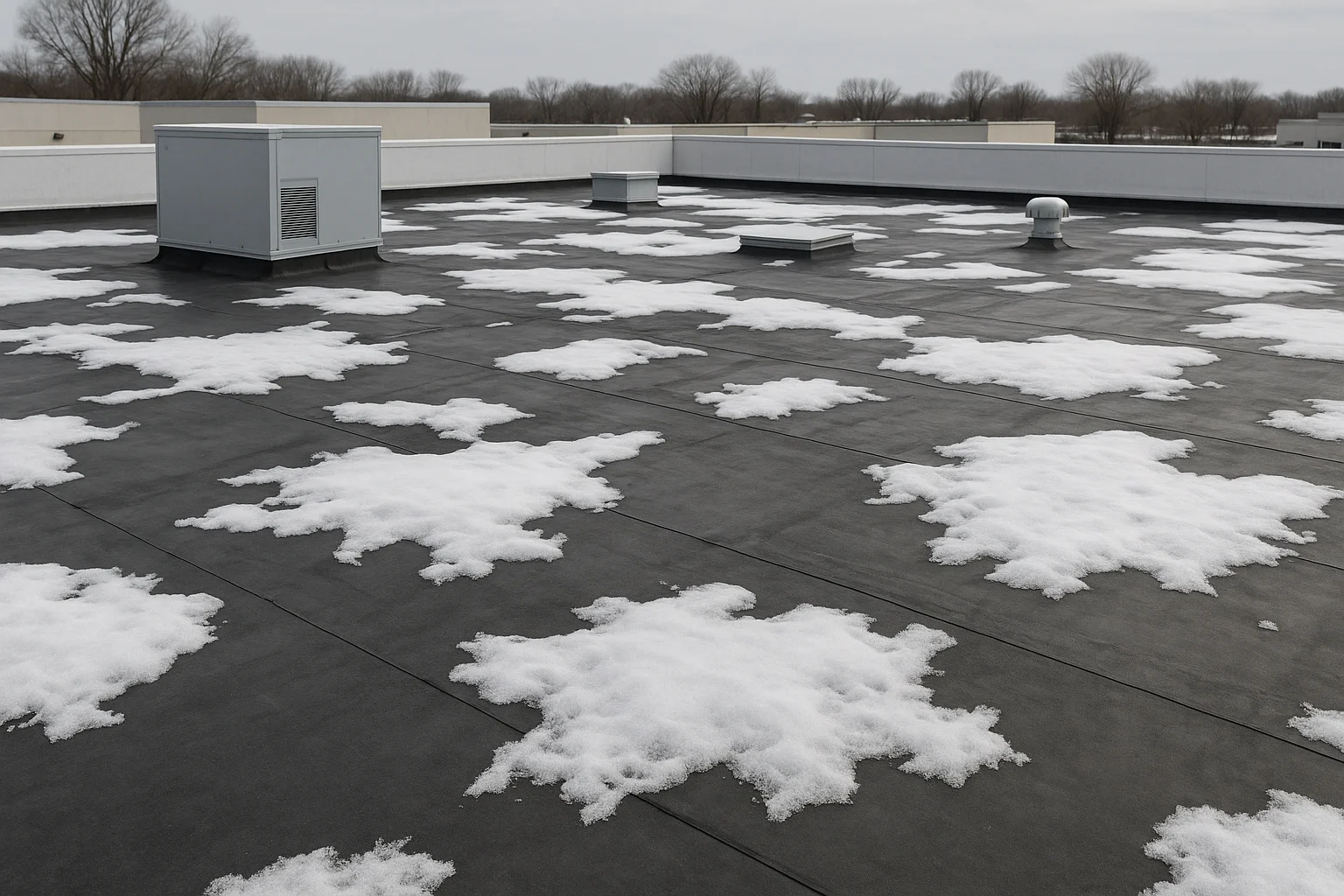
Freeze-Thaw Roof Damage
Freeze-Thaw Roof Damage on a Newark-area commercial building usually shows up as a ceiling stain, a tripped alarm, or a tenant call long after the roof detail first failed. Commercial Roofers of New Jersey traces the problem back to the source before closing it out. This page lays out how we think about it and what an owner should expect.
Water is rarely entering where the stain shows up. Freeze-Thaw Roof Damage on a Newark-area roof means tracing the leak back through seams, penetrations, curbs, drains, and the interior evidence until we find the actual entry point. Chasing the symptom wastes money and lets the cause keep working.
Everything we find gets recorded — the failed detail, the condition around it, and how far water has moved inside the assembly. That evidence is what tells us whether a focused repair will hold or whether the honest answer is recover or replacement.
For an occupied property in Newark, we often get a watertight temporary measure in place first so operations continue while the lasting repair gets planned properly. Newark buildings rarely give a crew a clean, empty roof. Rooftop units, screens, solar, antennas, old abandoned curbs, and tenant build-outs all crowd the field. We document what is actually up there before anyone prices the work.
With the inside protected, the cause gets repaired using materials that match the existing system, so today’s patch is not tomorrow’s leak. We also flag any warranty implications and how the fix changes the way the rest of the roof should be maintained.
Summer rooftop temperatures on a dark membrane in Essex County climb well past the air temperature, and the daily heating-and-cooling swing fatigues seams and flashings over the years. We plan for thermal movement, not just for the single worst storm.
A Nor’easter can stall over the New York metro for a day and a half, driving rain sideways into parapets, curbs, and wall terminations. We pay attention to the vertical details and the wind-uplift edges, because those are where a North Jersey roof usually gives up first.
We factor all of it into the recommendation, because a North Jersey roof that is only planned for fair weather is a roof that gets re-planned the hard way after the next freeze, storm, or ponding season.
The work begins on the roof, not in a brochure. We walk the assembly, talk through the call in front of you — freeze-thaw roof damage or whatever the roof turns out to need — and turn it into a written recommendation you can actually use.
Because most Newark and North Jersey buildings we work on stay open during the job, we schedule and stage around how the property actually operates and keep you informed at each step. What you are left with is a roof decision that lasts and an operation that kept moving the whole time.
Before we price anything, we put the roof condition and the recommendation in writing. The deliverable is a documented decision — photos, the condition of the membrane and details, the options on the table, and a clear recommendation — not a verbal estimate scribbled on a clipboard.
That record is the difference between a plan and a guess. For freeze-thaw roof damage on a Newark-area building it names the assembly we found, the details we inspected, the access and staging limits, and what we recommend — backed by photos — so an owner can take it to a board, a lender, or an insurer and decide with the facts in hand.