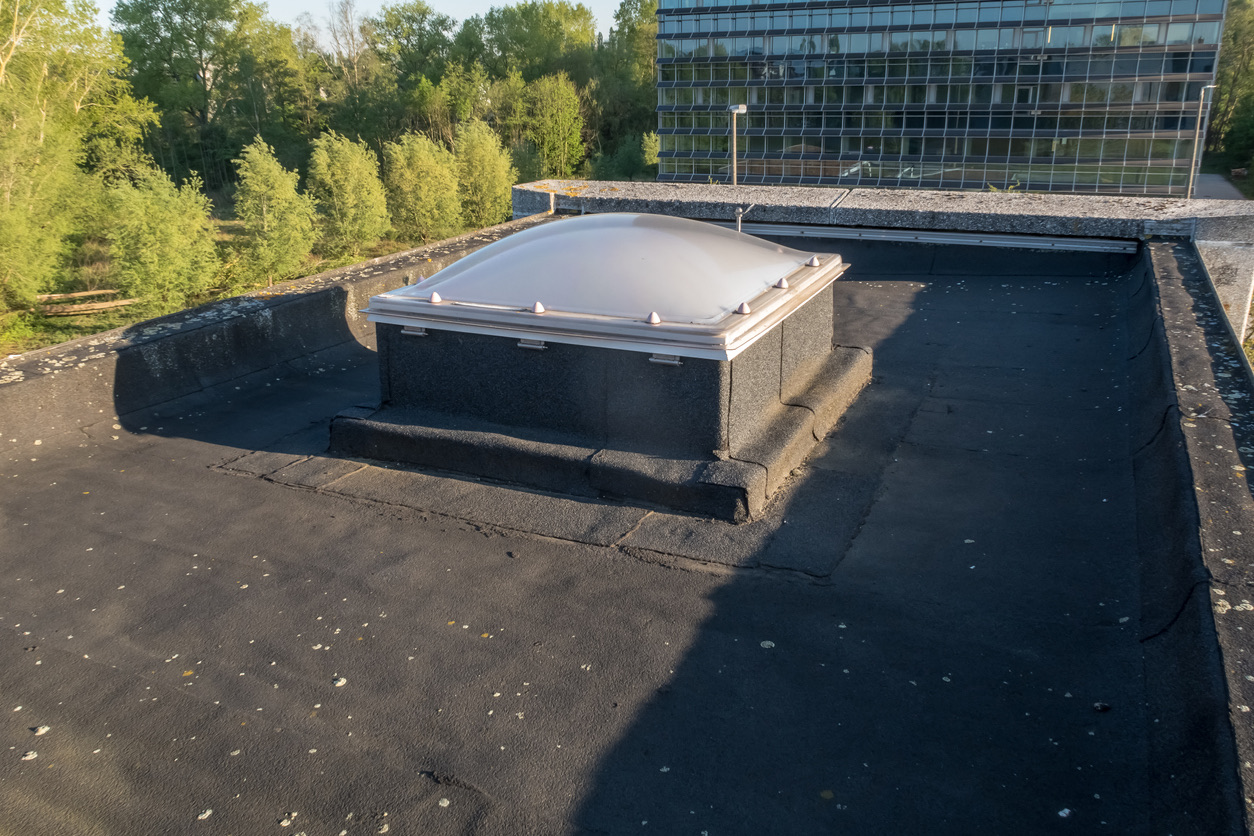
EPDM Roofing
Commercial Roofers of New Jersey provides EPDM roofing for commercial buildings in Newark and across North Jersey. The work starts with the roof you actually have — its age, its assembly, and the conditions on it — and the decision the owner needs to make next. Below is how we scope it for a working Newark-area property.
There is no off-the-shelf version of EPDM roofing. On a Newark-area commercial roof it has to fit the assembly that is already there — deck, insulation, membrane or coating, flashings, drainage — and the way the building runs day to day.
We walk the field methodically: seam condition and membrane age, signs of wet insulation, the edge metal and coping, the flashings at curbs and penetrations, the drains and scuppers, and the prior patchwork. On a Newark roof that has been in service for decades, EPDM roofing usually has to work around abandoned supports and details that stopped making sense after rooftop equipment changed.
It depends on the roof, and we will tell you straight. EPDM is the right move when the assembly beneath it is sound enough to justify the spend and the budget and tenant timing cooperate. When it is not, we say so and put the alternative — repair, recover, or replacement — on the table with the tradeoffs spelled out.
On a multi-tenant property near downtown Newark, the roof work has to be planned around people working underneath it. We name interior protection areas, staging limits, and the daily communication that keeps an occupied building running.
Ponding is a quiet killer on flat North Jersey roofs. Standing water after a storm points to drains that have lost pitch, sagging insulation, or a deck that has moved, and left alone it degrades the membrane and adds weight the structure was never meant to carry. We map where water sits before it becomes a leak.
Wind off the Newark Bay flats finds the perimeter first. Edge metal, coping, and the membrane attachment at the corners and eaves take the brunt of uplift, and once an edge lifts, a gust can peel a field that was otherwise sound. We treat the perimeter and corners as the make-or-break zones they are.
Commercial roofs in this area fail through repeated stress, not a single event, so we plan the work around the whole cycle — heat, cold, wind, water, and salt — instead of just the worst storm on the calendar.
We do not start with a sales pitch; we start with the roof. The first step is a walk of the actual assembly and a conversation about the decision in front of you, whether that is EPDM roofing or something the roof turns out to need instead. From there you get a documented recommendation you can act on.
Almost every property we touch in Newark and North Jersey keeps running while the roof work happens, so the plan is geared to your operations — access, staging, interior protection, sequencing — with regular updates as it moves. The aim is a durable roof decision and a building that never has to go dark to get there.
Before we price anything, we put the roof condition and the recommendation in writing. Everything gets written down: the assembly we found, the conditions we photographed, the areas we protected, and the decision we are recommending. That record is what lets an owner approve work with confidence instead of guessing.
That record is the difference between a plan and a guess. For EPDM roofing on a Newark-area building it names the assembly we found, the details we inspected, the access and staging limits, and what we recommend — backed by photos — so an owner can take it to a board, a lender, or an insurer and decide with the facts in hand.