Church Roofing
When a Newark-area property owner asks about church roofing, the real question is usually “is this the right call for this roof and this building right now?” Commercial Roofers of New Jersey answers that with a documented look at the membrane, the details, and the way the building gets used. This page lays out how we think about it and what an owner should expect.
There is no off-the-shelf version of church roofing. On a Newark-area commercial roof it has to fit the assembly that is already there — deck, insulation, membrane or coating, flashings, drainage — and the way the building runs day to day.
We walk the field methodically: seam condition and membrane age, signs of wet insulation, the edge metal and coping, the flashings at curbs and penetrations, the drains and scuppers, and the prior patchwork. On a Newark roof that has been in service for decades, church roofing usually has to work around abandoned supports and details that stopped making sense after rooftop equipment changed.
It depends on the roof, and we will tell you straight. Church is the right move when the assembly beneath it is sound enough to justify the spend and the budget and tenant timing cooperate. When it is not, we say so and put the alternative — repair, recover, or replacement — on the table with the tradeoffs spelled out.
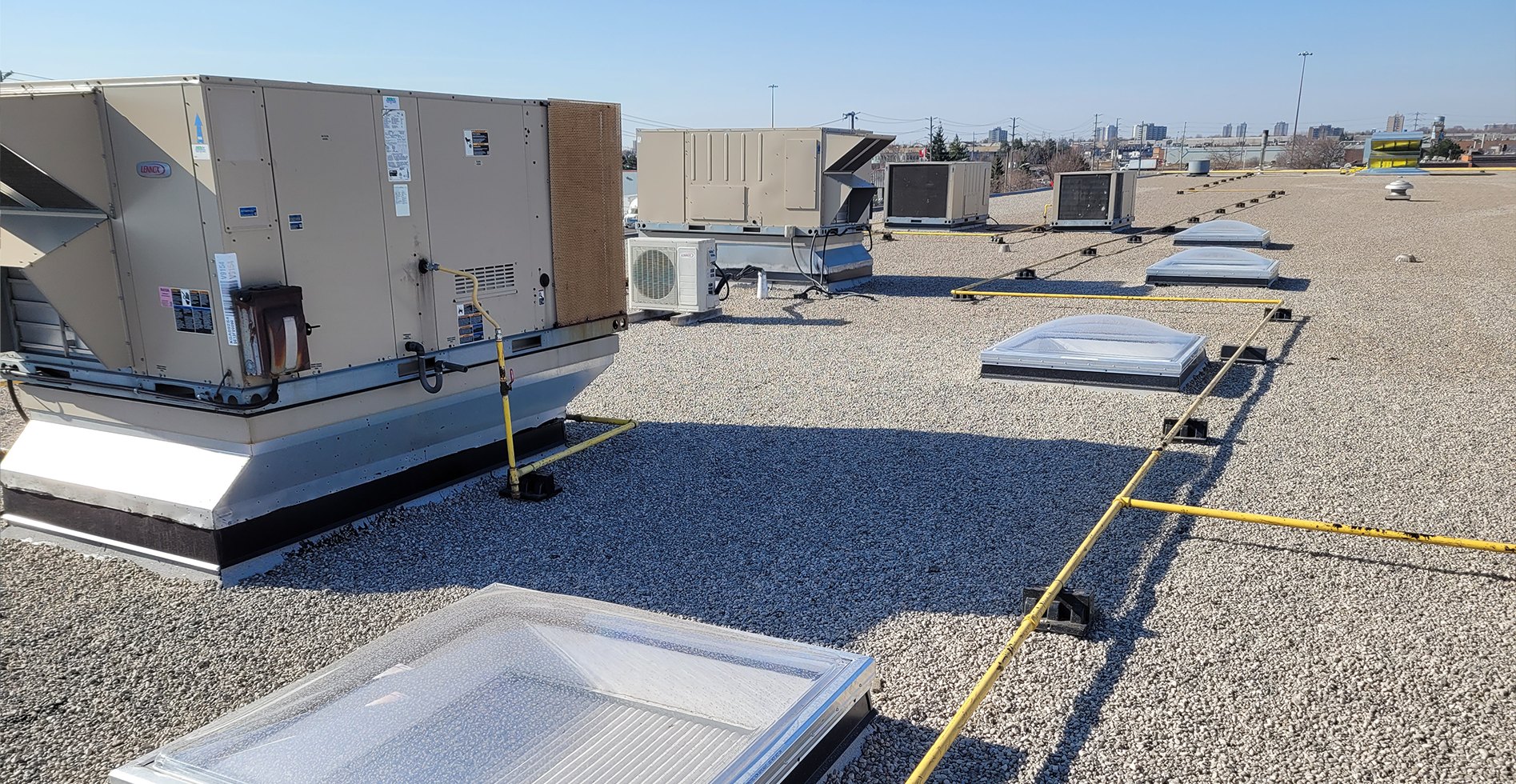
Newark buildings rarely give a crew a clean, empty roof. Rooftop units, screens, solar, antennas, old abandoned curbs, and tenant build-outs all crowd the field. We document what is actually up there before anyone prices the work.
A Nor’easter can stall over the New York metro for a day and a half, driving rain sideways into parapets, curbs, and wall terminations. We pay attention to the vertical details and the wind-uplift edges, because those are where a North Jersey roof usually gives up first.
Summer rooftop temperatures on a dark membrane in Essex County climb well past the air temperature, and the daily heating-and-cooling swing fatigues seams and flashings over the years. We plan for thermal movement, not just for the single worst storm.
None of that is a reason for alarm; it is just the reality a North Jersey commercial roof has to be built and maintained for, and it is why we judge a roof by how it handles repeated stress rather than how it looks on one dry day.
We do not start with a sales pitch; we start with the roof. The first step is a walk of the actual assembly and a conversation about the decision in front of you, whether that is church roofing or something the roof turns out to need instead. From there you get a documented recommendation you can act on.
Almost every property we touch in Newark and North Jersey keeps running while the roof work happens, so the plan is geared to your operations — access, staging, interior protection, sequencing — with regular updates as it moves. The aim is a durable roof decision and a building that never has to go dark to get there.
The first deliverable is a written read on the roof, not a number pulled from the air. Everything gets written down: the assembly we found, the conditions we photographed, the areas we protected, and the decision we are recommending. That record is what lets an owner approve work with confidence instead of guessing.
That documentation is what separates a real plan from a verbal estimate. For church roofing on a Newark-area building, the write-up names the assembly we found, the details we inspected, the access and staging limits, and the option we are recommending — with photos to back it up. An owner can take that to a board, a lender, or an insurer and get a decision without having to take anyone’s word for it.