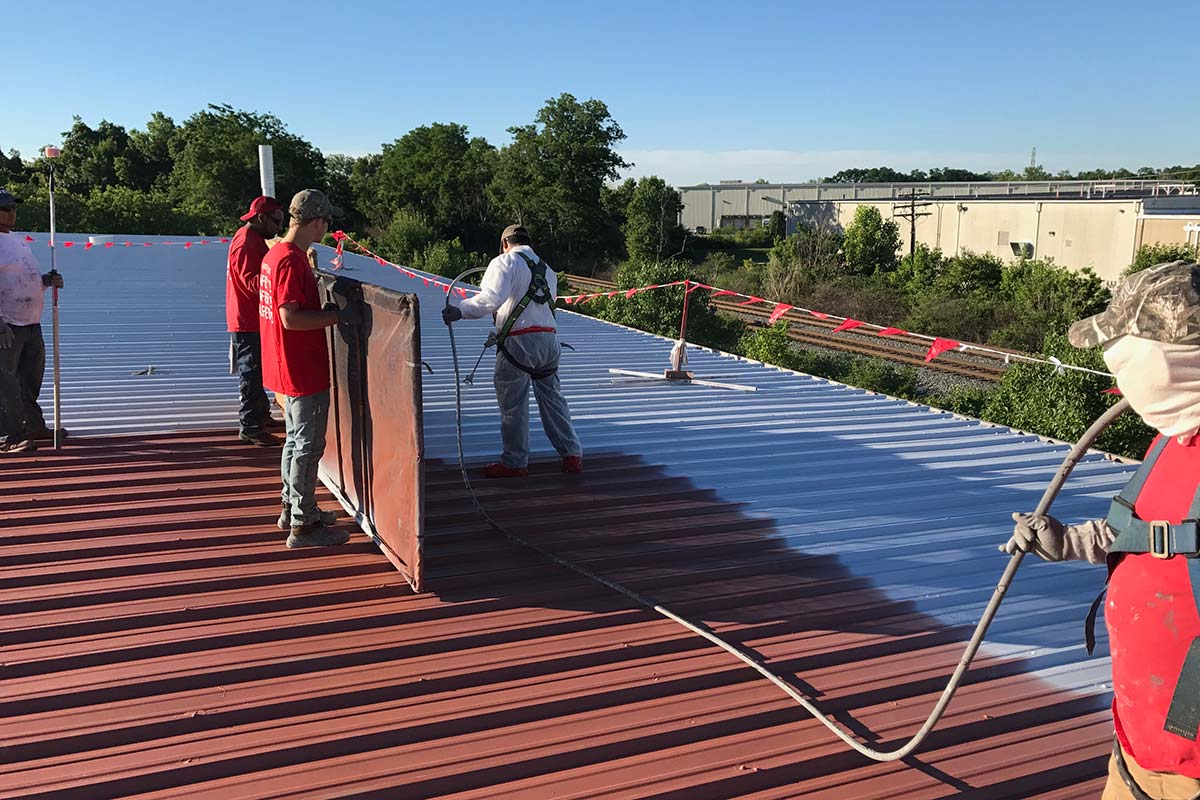
Silicone Coating
Silicone Coating is one of the commercial roof systems Commercial Roofers of New Jersey works with on Newark and North Jersey buildings. No single system is right for every roof, so the point of this page is to be honest about where Silicone Coating fits and where another assembly makes more sense. Below is how we scope it for a working Newark-area property.
Silicone Coating is right for some Newark-area roofs and wrong for others. The deck and existing assembly, the slope and drainage, the rooftop traffic, the budget, and the service life the owner needs all decide it — and we let those decide, rather than defaulting to whatever installs fastest.
On a low-slope building in Newark, Silicone Coating has to coexist with the curbs, edge metal, penetrations, and drainage already there. The field membrane is rarely the weak point; the flashings and terminations are, so we plan those in from the start.
Roofs rarely fail in the middle; they fail at seams, edges, and penetrations. With Silicone Coating we are strict about substrate prep, fastening or adhesion, lap quality, and the terminations at walls, curbs, and drains, since that is exactly where a North Jersey roof gets put to the test.
Newark buildings rarely give a crew a clean, empty roof. Rooftop units, screens, solar, antennas, old abandoned curbs, and tenant build-outs all crowd the field. We document what is actually up there before anyone prices the work.
Wind off the Newark Bay flats finds the perimeter first. Edge metal, coping, and the membrane attachment at the corners and eaves take the brunt of uplift, and once an edge lifts, a gust can peel a field that was otherwise sound. We treat the perimeter and corners as the make-or-break zones they are.
Ponding is a quiet killer on flat North Jersey roofs. Standing water after a storm points to drains that have lost pitch, sagging insulation, or a deck that has moved, and left alone it degrades the membrane and adds weight the structure was never meant to carry. We map where water sits before it becomes a leak.
None of that is a reason for alarm; it is just the reality a North Jersey commercial roof has to be built and maintained for, and it is why we judge a roof by how it handles repeated stress rather than how it looks on one dry day.
The work begins on the roof, not in a brochure. We walk the assembly, talk through the call in front of you — silicone coating or whatever the roof turns out to need — and turn it into a written recommendation you can actually use.
Because most Newark and North Jersey buildings we work on stay open during the job, we schedule and stage around how the property actually operates and keep you informed at each step. What you are left with is a roof decision that lasts and an operation that kept moving the whole time.
Nothing gets priced until the roof condition and the recommendation are on paper. The deliverable is a documented decision — photos, the condition of the membrane and details, the options on the table, and a clear recommendation — not a verbal estimate scribbled on a clipboard.
Written findings are what let an owner approve work with confidence. For silicone coating we document the assembly, the conditions, the access constraints, and the recommended option with photographs, so the decision can be defended to ownership, a lender, or an insurer without relying on anyone’s memory of a site visit.