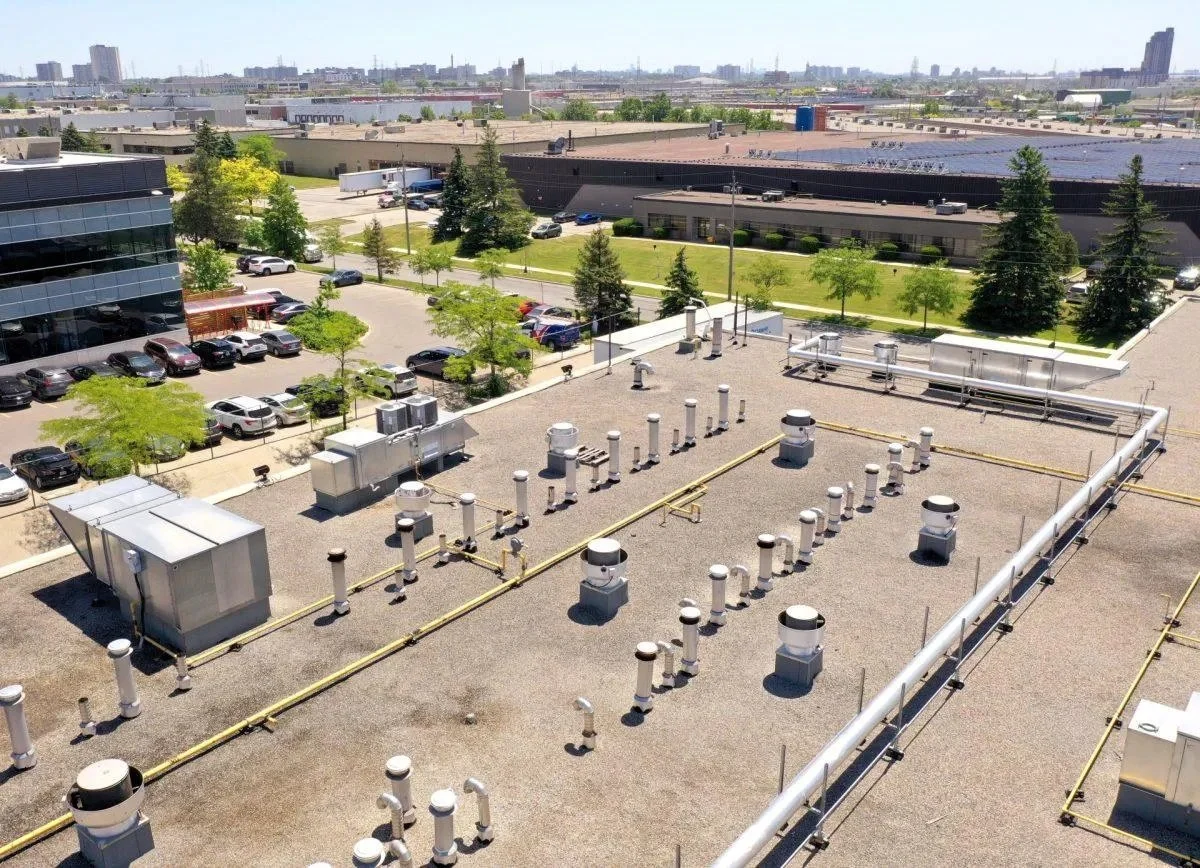
Food Processing Facility Roofing
A food processing facility in the Newark area has roof needs that a generic “commercial roof” checklist misses. Commercial Roofers of New Jersey scopes the work around how this kind of building actually operates. What follows is a straight read on the work and the calls that go into it.
Every food processing facility carries roof constraints a standard estimate glosses over: how a crew gets up there, what mechanical equipment is already on the roof, how it drains, the occupancy below, and the hours or seasons when work is even possible. We pin those down first.
Warehouse and distribution roofs around Port Newark come with their own rule: keep the crew and the staging clear of the dock lanes and truck circulation. We plan access so the roof work and the freight operation are not fighting over the same space.
On a food processing facility, the roof’s condition and the business pressure are two different things, and we keep them apart before recommending repair, recover, or replacement. We separate the roof problem from the business problem first, then put both in writing so a facility manager can take the scope to ownership and get a clean yes or no.
The answer factors in the service life the owner needs, the downtime the operation can absorb, and the money available, and we put the tradeoffs in plain terms so the decision stays the owner’s to make.
North Jersey roofs live through real freeze-thaw cycling. Water finds a seam or an open lap in fall, freezes inside the assembly over winter, and pries the detail open a little wider every cold night. We look at how a roof handles that movement, not just how it looks on a dry afternoon.
A Nor’easter can stall over the New York metro for a day and a half, driving rain sideways into parapets, curbs, and wall terminations. We pay attention to the vertical details and the wind-uplift edges, because those are where a North Jersey roof usually gives up first.
Commercial roofs in this area fail through repeated stress, not a single event, so we plan the work around the whole cycle — heat, cold, wind, water, and salt — instead of just the worst storm on the calendar.
There is no pitch up front — there is a roof walk. We look at the actual assembly and talk through the decision you are facing, whether that ends up being food processing facility roofing or something else the roof needs, and you leave with a documented recommendation rather than a sales call.
Most of the buildings we work on around Newark and North Jersey stay occupied while the roof gets handled, so we plan the work around your operations — access, staging, interior protection, and the schedule — and keep you in the loop as it moves. The goal is a roof decision that holds up over time and a property that keeps running while it happens.
The first deliverable is a written read on the roof, not a number pulled from the air. We separate the roof problem from the business problem first, then put both in writing so a facility manager can take the scope to ownership and get a clean yes or no.
That record is the difference between a plan and a guess. For food processing facility roofing on a Newark-area building it names the assembly we found, the details we inspected, the access and staging limits, and what we recommend — backed by photos — so an owner can take it to a board, a lender, or an insurer and decide with the facts in hand.